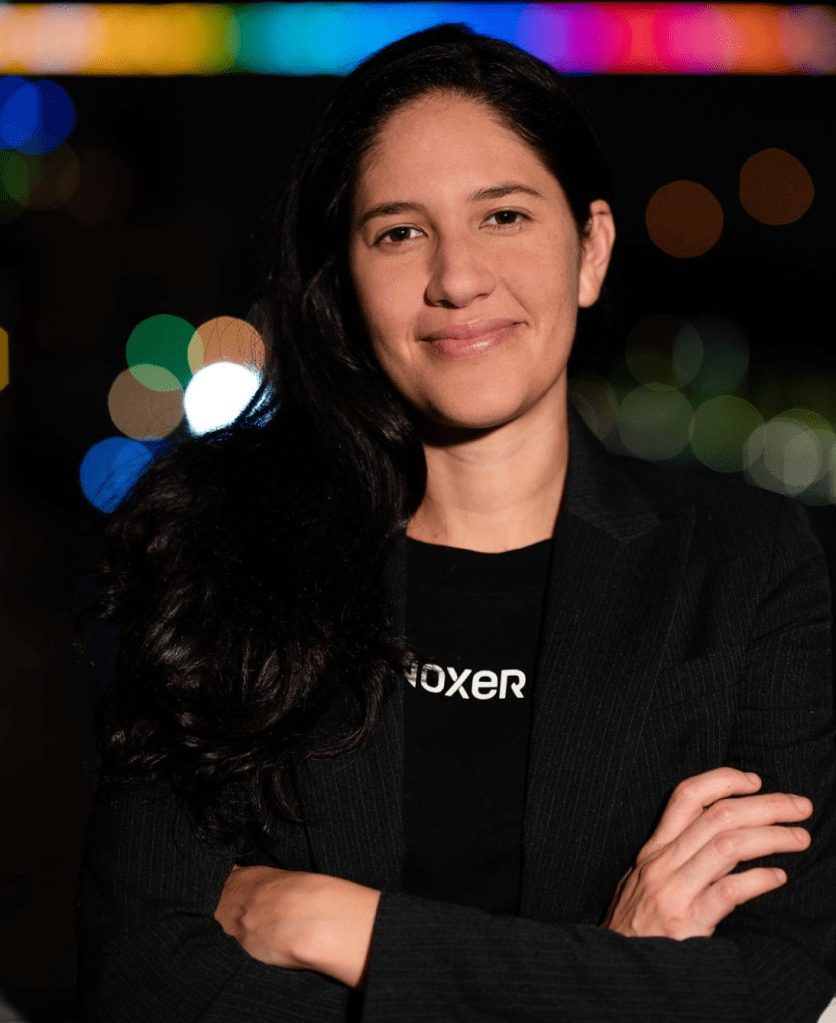
“I wanted to thank Alex for agreeing to this interview and providing such detailed , well thought out answers. Alex started the idea of Woxer in 2011, and about 5 years ago brought the idea to life. Her focus was to bring a more comfortable underwear, a boxer for women, that started as a product for women athletes and has taken on a life of its own. Since then the product has been a smashing success. Alex currently lives in Miami with her partner Stephanie as is a huge sports fan and big backer of women sports.” – Zara Halabu
What did you study in college, and how did your educational background shape your career in business?
In college I studied Finance and Marketing, but the true impact on my career came from witnessing the practical application of these subjects beyond the textbooks. It was the real world experiences shared by my professors and the entrepreneurial drive I saw in my peers that really shaped my approach to business. Seeing other students passionately work on their businesses, led me to start too. The environment encouraged me to look beyond academic learning and appreciate the practical challenges and opportunities in the business.
Can you share the key milestones in your career that led you to your current position in the clothing industry?
My journey in the clothing industry began with a passion for sports during my childhood. This passion turned into a catalyst for my career when I faced a practical issue in high school. I had to change my underwear in the locker room after school to go to practice, which I found frustrating and inconvenient. This problem persisted into college, prompting me to create Woxer to address this specific need, particularly noticing that it seemed to uniquely affect women. One of the first milestones in my career was starting a business with my father in 2012 in the consumer goods sector. This early experience provided a foundation in business operations and product marketing.
What are some of the biggest challenges you’ve faced as a woman in business, and how did you overcome them?
One of the biggest challenges I faced was starting Woxer with less than $10,000 from my savings. This meant I had to be very careful with every dollar, stretching it as far as possible and reinvesting all earnings back into the company to grow the brand. Another significant challenge was the need to pitch to investors as an early-stage startup founder. In the male-dominated venture capital industry, most could not relate to the problem Woxer solves and often dismissed the idea without much consideration. Despite these challenges, Woxer became profitable after just six months. By starting small and viewing every setback as an opportunity to learn, we achieved sustainable growth. We continue to nurture this growth by taking small, deliberate steps every day, month, and year. Over time, all these growth challenges have been woven into the Woxer ethos. We are strong, resourceful, and persistent, never giving up even when faced with tough times.
Balancing a career can be demanding. How do you manage work-life balance, and what strategies have worked well for you?
To manage work-life balance, I focus on intentional planning and prioritization. I plan my year well in advance and break down my goals into manageable, quarterly targets. This strategy helps me stay focused in both my professional and personal responsibilities. One strategy that has worked well for me is sticking to a consistent daily routine. For example, I go to bed at the same time each night, to be productive the next day. Eating meals at the same time every day, also helps keep my energy levels up without having to make time consuming decisions about when and what to eat. I maintain a consistent workout routine, exercising on specific days and times. I make an effort to streamline repetitive tasks so they don’t interrupt my schedule, saving me time and mental energy. In terms of work, I schedule specific times for focused work and meetings. This allows me to work without interruptions. Each week, I plan in advance for the following week and set aside time for important work, creative activities/learning, networking, and meetings. Personally, I make time to spend moments with my immediate family, and catching up with close friends. Early in my career, I consciously chose to spend my time on the most meaningful tasks and with the people who matter most to me. This approach has been very beneficial, allowing me to focus on what truly matters to me.
Have you had mentors or role models who played a significant role in your career? How important is mentorship for women in business?
Mentors have played a crucial role in my career, especially during the challenging early stages before generating revenue. I was fortunate enough that my first mentor was my father, who not only allowed me to start a business with him but also taught me everything he knew over four years. Whenever my business needed a boost, I went to two people that always gave me time, advice, and insight that really helped me move forward. These mentors, who were years ahead of me in their careers, had already navigated the growth challenges I was facing. Their willingness to share their experiences and lessons learned was invaluable.
Mentorship holds significant importance, particularly for women in business. Often, women may hesitate to ask for favors or seek help. Having access to mentors who have already accomplished something similar can dramatically smooth the journey ahead. You’ll recognize a good mentor when you find one, as they offer guidance that resonates deeply and practically with your needs.
How do you approach networking in your industry, and how has it contributed to your professional growth?
I view networking as an essential part of my annual goals, and it has brought immense value to my professional growth. As a marketer and leader, I’m aware that I can’t know or learn everything by myself. Over the years, I’ve formed strong friendships with other founders, marketers and operators, and we regularly exchange information. This network has saved me a lot of time in choosing software, vendors, and suppliers. It’s also very enjoyable to share insights with people who have the same passion as I do. To continue to expand my network, I dedicate one hour each week to connect with a founder or professional. And three years ago, I joined a community of entrepreneurs called EO (Entrepreneurs’ Organization), which has greatly broadened my network and opened up new opportunities for collaboration and learning.
In a male-dominated industry, do you feel women are given equal opportunities? What steps do you think can be taken to promote gender equality in the sports fitness business?
I don’t think women are given equal opportunities in male-dominated industries. The balance between men and women in decision making roles is significantly skewed. This disparity is a rooted issue that has persisted for centuries. In the business sector, women face underrepresentation in critical areas such as venture capital funding and executive positions. Also, the pay gap between men and women is still a big issue in 2024, showing that things are equal for women, we can continue to do a few practical things:
Empowerment from Within: A crucial step is for women to actively support and elevate each other within their professional circles. When women champion one another, share success stories, and offer mutual support, it creates a positive cycle of empowerment. Achieving a level playing field requires a shift in our collective mindset to celebrate and recognize the achievements of women.
Cross-Promotion in Sports: Having female basketball players join in on NBA events, like the All-Star game, is a great step forward. It’s awesome to see male NBA players cheering on women’s games and giving them shout outs. This kind of support builds respect for everyone, no matter their gender.
Enhanced Media Coverage: Media coverage is super important. It’s good news that more places are starting to cover women’s sports like college basketball and volleyball. The more people see and hear about women’s sports, the more respect and investment they’ll get.
Entrepreneurial Initiatives: Entrepreneur-driven efforts, such as venues dedicated to broadcasting women’s sports and organizations working to close the gender gap, are vital. For example, bars that exclusively show women’s sports and initiatives like TogethXe, founded by female athletes, are innovative ways to support and promote gender equality in sports.
How do you stay updated on industry trends, and what advice do you have for staying relevant in a rapidly evolving business landscape?
First, I make it a point to attend conferences and try to visit a new one every year. This helps me get fresh perspectives and insights. I also keep an eye on the financial landscape of my industry, as well as predictions on future trends and customer behavior. I take regular meetings with suppliers and vendors to ask them about their focus and outlook for the next three years to get a sense of upcoming trends. My advice for anyone looking to stay relevant in a fast-evolving business landscape is stay curious- seek out new information and ask questions.
What advice do you have for young women aspiring to build a successful career in the apparel industry?
For those aspiring to build a successful career in the apparel industry, start by addressing a problem that exists or enhance an already existing product. It’s often more effective to begin with a specific niche, focusing on a particular area where you can make a significant impact, and then broaden your scope from there. Also, prioritize using sustainable and high-quality materials right from the start.
What aspects of your work in the sports apparel industry do you find most fulfilling, and how do you hope to contribute to the industry’s growth and positive impact?
What aspects of your work in the sports apparel industry do you find most fulfilling? I find providing comfort to athletes incredibly fulfilling. By focusing on their diverse needs and striving to improve upon existing products, I am driven to stay innovative. For many, the products we create are a necessity, not just a desire.
How do you hope to contribute to the industry’s growth and positive impact?
I am particularly excited about contributing to greater equity within the industry, including leveling the playing field across all areas, such as pay and opportunities, and enhancing the representation of women in sports. Comfortable underwear, for example, might seem like a basic expectation, but it’s a game-changer for many of our customers. The first time they truly felt comfortable was with our Woxer boxer briefs, which empower rather than sexualize, boosting confidence, acceptance, and self-esteem. Woxer challenges the norm by rejecting the trend of creating minimal, overtly sexy underwear. Our inception was born from personal discomfort in a locker room, recognizing a widespread unmet need among LGBTQ+ individuals and beyond who don’t identify with conventional options like thongs.
Any fun facts about you that you’d like to share (ie favorite foods, hobbies, interesting facts, etc) ?
Back in 2017, I met with the guy who owned men’s underwear brands. It was our second time meeting up, and he mentioned he was off to a textiles conference in Colombia in just a couple of days. Without overthinking it, I asked if I could come along to learn from him. He said yes right away. The conference was just two days away! He ended up being my mentor for a few years after that. A fun fact I’d like to share is about pockets in clothing. In the 17th century, pockets started to be a standard part of men’s clothing. But for women, it took until the 20th century for pockets to become more common in their clothing. Even then, women’s pockets often stayed smaller and weren’t as useful as men’s pockets.
 Women in Sports Business