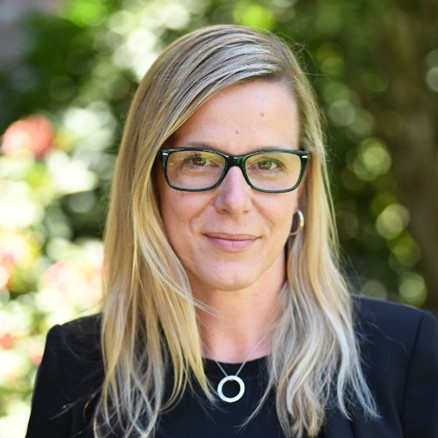
Jill Geer
Chief Communications & Marketing Officer, USA Gymnastics
“Jill shared that her success is rooted in strong relationships and practical experience rather than formal degrees alone. She stresses the importance of flexibility in work-life balance and has navigated challenges with a focus on being present and resilient. Outside of her professional life, Jill’s passions include playing rock flute and being a cat whisperer. Her journey is both inspiring and a testament to her remarkable achievements in the sports industry.
I’d like to thank Jill Geer for her insightful interview. As the Chief Communications & Marketing Officer at USA Gymnastics, Jill leads efforts across media relations, branding, and crisis management. Her career path—from a history and philosophy student to a key figure in sports communications—demonstrates her versatile skill set and dedication.” – Zara Halabu
Please describe your role; responsibilities at that position?
Executive oversight of USA Gymnastics’ Communications & Marketing department, which handles media relations, executive, internal and external comms., PR, marketing, social media, crisis management, branding, creative content and livestreaming.
What did you study in college and how did your educational background shape your career in the sports industry?
I majored in history and minored in philosophy as an undergraduate at the University of Arkansas, and I ran on the track & cross-country teams my first three years. I got my masters in U.S. intellectual history while working in the UA’s women’s sports information department and finished it while working as a sports writer at the Northwest Arkansas Times. I worked as a waitress from high school through grad school. Altogether, my academic and early work history honed my ability to think, write, read, hustle, handle tense situations, work crappy hours, crisis manage and multitask. I have made use of all of those skills in my 30-year career in communications.
Can you share the key milestones in your career that led you to your current position in the sports industry?
When the women’s SID at Arkansas, Bill Smith, walked into the restaurant where I was working in 1993 and asked me to be a graduate assistant in his department, that started everything. It led directly to my first sports writing job, which led directly to me working for NBC at the 1996 Olympic Games, which led directly to me being hired at USA Track & Field, which eventually led to my current position at USA Gymnastics. Along the way, I was fortunate that my bosses and colleagues were advocates and provided growth opportunities.
What are some of the biggest challenges you’ve faced as a woman in sports business; how have you overcome them?
I have always said I don’t think of myself as a woman in sports, I think of myself as a person in sports. I grew up as an athlete in a neighborhood of boys, competing against boys, and then worked in restaurants surrounded by short order cooks and male waiters. If I faced discrimination for being a woman in sports, I either was oblivious to it or just muscled my way through it. For instance, as a young sports writer in Arkansas, my sports editor took great pride in having me cover an Arkansas men’s basketball game and go into the locker room. (This was when Arkansas was going to the NCAA finals and winning.) It made the head men’s SID uncomfortable but didn’t bother me at all. That said, I certainly have had to handle situations that men in my position haven’t had to deal with: having reporters kiss me on press row, including making a move to do it on the mouth. That was a long time ago. But I’ve worked with far more terrific people than not.
Balancing a career is demanding. How do you manage a work -life balance? What strategies have worked well for you?
There is no such thing as work-life balance. What we strive for is work-life FLEXIBILITY. Something is always out of balance, depending on the week or month or time of year. When I have had to deal with family crises, work was barely a thought. When I took FMLA for a few months, I did not worry about work or what I was missing at all. When it is an Olympic year, my family knows my availability is a bit different. Having the flexibility to take of what you need to take care of, when you need to take care of it, is what it’s about. The other key is it be present in whatever you are doing – when with your family, be present with them. When at work, be present at work.
How important is mentorship for women in the sports industry? Have you had mentors or role models who played a significant role in your career and can give some details?
I have had many mentors and advocates in my career – bosses and colleagues who hired me, promoted me, advocated for me in new positions. Every single job in sports that I got, I got through the help and advocacy of others. Until the last several years, however, all of them had been men because that’s who had power in the sports industry. But so much has changed. At USA Gymnastics, not just are our board chair and president & CEO women, our entire C-suite is comprised of women. At my previous job in higher education, we had only one man on our executive team.
In a male-dominated industry, do you feel women are given equal opportunities? What steps do you think can be taken to promote gender equality in the sports industry?
When it comes to administration and similar jobs, women have more opportunities than ever – infinitely more than even 10 years ago- but there is still a pay gap in professional positions, to say nothing of the pay gap for athletes in most sports. There are still some sports and teams and franchises that are male-dominated and/or very conservative. But I work in a sport that is female-driven, with the women’s side of the sport transcendent. I work in a sport that in this country is run by women, where women drive the TV viewership, the fan engagement and business engagement. Not many sports can say that.
What aspects of your work in the sports industry do you enjoy the most? What parts do you find the most challenging?
I love working with a ride range of people – athletes, media, business executives, agents, volunteers, contractors, fans. It is NEVER boring. Working for a nonprofit, the biggest challenge is always tried to do a lot – to do EVERYTHING – with limited budget and staff. What we have been able to accomplish at USA Gymnastics has been incredible, thanks to the talent and dedication of people who have had to work twice as hard and twice as well.
What advice do you have for young women aspiring to build a successful career in the sports industry?
Keep your relationships. Relationships are everything in this industry, which is why interns go on to become CEOs in the organizations they started in (I’m looking at you, NFL). As I said earlier, every job I’ve had in sports has happened thanks to a relationship I had with a person who thought I deserved an opportunity.
The other piece of advice I would give is related to cultivating relationships, and that is to prioritize work experience over getting lots of degrees. I was a Phi Beta Kappa student who studied and wrote about intellectual history, focusing on the Progressive Era. But it’s my waitressing career that has helped me most in sports communications, because I have to serve people (athletes, the media, the sport), work all-out all the time, and make decisions under stress. Once I started working in sports, it led to the relationships that shaped my current career.
What is your long-term personal goal that you still want to achieve both business wise and personal?
My professional goals have always been to elevate athletes and their stories. Ironically, my biggest goal within gymnastics is to help America’s men’s gymnasts get more attention. Most of my goals are now personal: to enjoy life, my family, my cats, my friends. To stay healthy, and to one day return to waitressing!
Any fun facts you’d like the world to learn about you? Favorite food, hobbies, number of kids, pet peeves, etc. The more the merrier!!
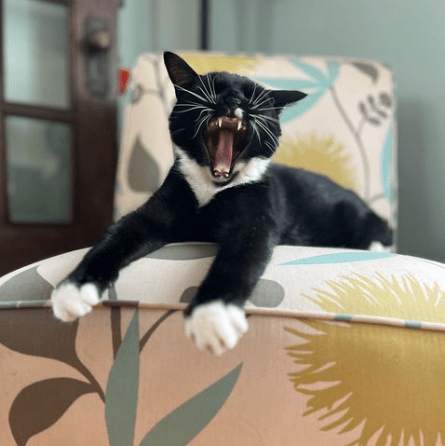
I am a cat whisperer, was a state cross country champion in high school, once balanced a spoon on my nose for 20 minutes, and I play rock flute with local Indianapolis bands. A few years ago, I ran on a fractured leg for over a year without realizing it. I am a nerd who also plays role-playing games such as Descent. I can both play the piano intro on flute and rap the lyrics to “Lose Yourself”. I once was the mascot for the Arkansas women’s soccer team.
 Women in Sports Business