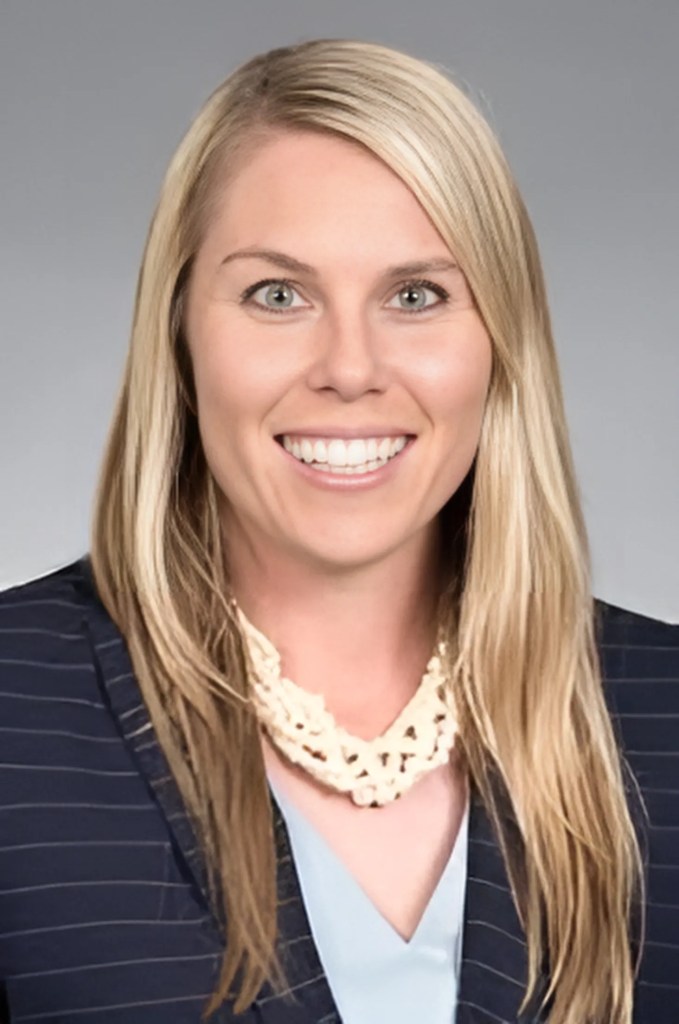
Kelly Eddy
Vice President, International Tournament Business at PGA TOUR
Thank you, Kelly Eddy, for sharing your inspiring journey from counseling to golf tournament leadership. Your path is a perfect example of how skills like listening, collaboration, and communication can seamlessly transfer across industries.
It’s incredible how you used your background in psychology and counseling to build a successful career in sports—proof that there’s no one-size-fits-all entry point. Your story highlights the power of mentorship, raising your hand for opportunities, and embracing change, even when it’s uncomfortable.
Your honesty about pay inequality and the importance of developing confidence is so important for young women navigating male-dominated spaces. And your love for collaboration and growth shows why you’ve made such an impact in the PGA TOUR’s international business.
Please describe your role and responsibilities at that position?
Creating, executing and managing the tournament business strategy for our strategic alliance with the DP World Tour/ European Tour.
What did you study in college and how did your educational background shape your career in the sports industry?
I have a Masters degree in Counseling, a bachelors in Psychology and minors in communication and Spanish. I was a School Counselor and Licensed Professional Counselor (LPC) in Oklahoma and in Kansas for 7 years before receiving an opportunity to jump into the professional sports business. I played golf in college but never endeavored to work in sports after graduation. Now, I’ve done this for 10 years (longer than I was a counselor) and I’m grateful everyday. I can’t imagine not having the opportunity to do what I do now. I use the skills I learned in my degrees and as a counselor every single day! At the heart, they are people skills: listening, negotiation, collaboration, teaching, questioning and follow-through.
Can you share the key milestones in your career that led you to your current position in the sports industry?
I played golf growing up and through college. As a sport, it taught me innumerable life lessons but it also put me on a level playing field with local business leaders as a young girl. Because of my experience on the course having a common language with every other golfer, I never realized females might not be on a level playing field at times. After college, I went to graduate school and became a counselor. The skills I learned as a counselor have been integral in my success today. While it would never be recognized as a proper training program for sports business, I am confident I would not be where I am today without that stop on the journey. During that phase, I began coaching a high school girls’ golf team and through that, met the leaders of the professional golf event in Kansas City where I was at the time. I began volunteering with them, leading their charity committee year-round. After a few months of that, their board president asked if I would assume the role of Executive Director of the tournament. It was a HUGE jump and took a lot of thought but I decided to try it for a year. At the time I had just renewed my counseling license and would have four more years to accomplish my CEUs and go back to it if I decided the new endeavor was not for me. That was almost 11 years ago now. I ran that tournament for almost four years and then was hired directly by the PGA TOUR in a Tournament Business role. During my time at the TOUR, I served in a Tournament Business role for Korn Ferry Tour, then for PGA TOUR Champions and now lead the Tournament Business Strategy for the relationship between the European Tour (DP World Tour) and the PGA TOUR. Each move has brought an inordinate amount of learning and growth and built on the last. I love what I do today and would not have been qualified without each and every stop on the journey leading up.
What are some of the biggest challenges you’ve faced as a woman in the sports business, and how have you overcome them?
The biggest challenge has been pay equality. I have not dwelled on it at all and I don’t think it helps to but if I’m being honest, that has been the reality. I had a once-in-a-lifetime opportunity to enter a new industry and I’d do it over again but I was hired at a salary that was laughable. From there, every opportunity is based on your past so there were several years where I felt like I couldn’t get out from under that start. Now, thanks to a few great managers and bosses, they have helped me right-size that and I feel valued and taken care of. There was no fast-track to overcoming it but eventually it worked itself out.
Balancing a career is demanding. How do you manage a work -life balance? What strategies have worked well for you?
Being honest with myself about my strengths and weaknesses and adapting strategies for my weaknesses has been huge. That took maturity and a few failures. Lists help me a lot. Putting everything in my calendar is crucial. Sticking to a routine – as much as I hate it – is a game-changer. Lastly, valuing and surrounding myself with people who have qualities I don’t have is extremely helpful. I don’t have to be all things if I’m honest about what I’m not and solve for those pieces in some way.
How important is mentorship for women in the sports industry? Have you had mentors or role models who played a significant role in your career and can give some details?
I owe everything to my mentors and I hope to be a great mentor for others. I’ve adopted a few ladies or been adopted by them in a mentor relationship and I think I gain more from it than they do! My mentors have helped me with career decisions as well as with how to handle difficult work situations. The experience and suggestions they have had have been out of the realm of what I could have thought of on my own and they were right on! A mentor is the reason I had the opportunity to move to PGA TOUR headquarters in the first place and a mentor is also the reason I had the opportunity for my latest role with the PGA TOUR. I’ve learned the most through people and I’ve also found the greatest opportunities in my career because of people suggesting I look at an open role. I would never be where I am without several others!
In a male-dominated industry, do you feel women are given equal opportunities? What steps do you think can be taken to promote gender equality in the sports industry?
I think we have to be more confident and trust our voice. It took me a while to develop that but since I have, everything has changed. We also have to look for mentors and raise our hands to be involved with extra projects. That is how people notice your talents and potential. I think that advice is honestly the same for both genders but for females it’s even more important. We need a little more help climbing the rungs.
What aspects of your work in the sports industry do you enjoy the most? What parts do you find the most challenging?
I love collaborating with and developing people. Having the ability to work with tournaments who want to grow and sophisticate their business is the most exhilarating part of what I do and I pinch myself everyday that I have the opportunity to do something I love so much. The most challenging part is that it’s always different and always changing and we have to stay nimble to stay relevant. Change is hard for everyone and I have to challenge myself continually to embrace it and keep reimagining the future.
What advice do you have for young women aspiring to build a successful career in the sports industry?
Volunteer! Raise your hand for opportunities, even if they are unpaid!
Any fun facts or interesting things you’d like the world to learn about you? Favorite food, hobbies, pet peeves, etc.?
I’m a golfer by birth and by upbringing and I still love the game more than I could ever put into words but I became obsessed with tennis after college. A ski injury won’t let me play as often these days but tennis is my passion and I would play everyday if I could!
 Women in Sports Business