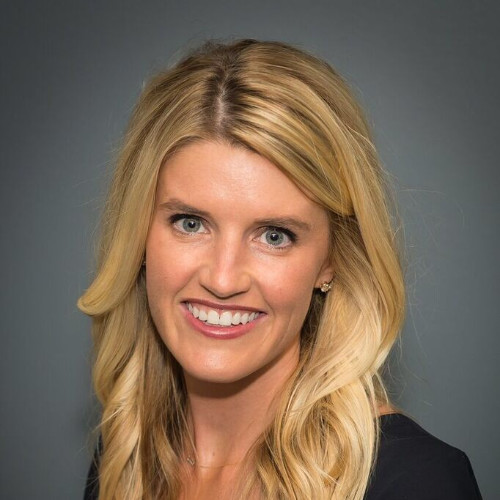
Delanie Foley
Vice President, Event Booking, Dallas Cowboys & AT&T Stadium
“Meet Delanie Foley, Vice President of Event Booking for the Dallas Cowboys and AT&T Stadium. Delanie oversees the planning and execution of nearly 25 events each year, from stadium concerts and international soccer matches to major national events like the NFL Draft, WrestleMania, and the upcoming 2026 FIFA World Cup. A graduate of Ole Miss, she has built her career on communication, relationship building, and resilience, while balancing leadership in a male-dominated industry with raising a family of four..
Thank you to Delanie Foley for sharing her journey and expertise with us. Her leadership in bringing world-class events to AT&T Stadium, her dedication to mentorship, and her advice on building relationships and confidence serve as true inspiration for women in sports and beyond.“– Zara
Please describe your role & responsibilities at that position?
As Vice President of Event Booking for the Dallas Cowboys and AT&T Stadium, Foley works with local organizing committees, event promoters and different venue departments to plan and execute events successfully. Her area of expertise includes financial feasibility, business structure, sales, and marketing as well as media and branding of third-party events. AT&T Stadium currently host approximately 25 events every year. Specifically, Foley is responsible for planning and coordinating all areas of these events with stadium departments including ticketing, suites, marketing, and operations as well as the financial models and business arrangements. The events range from stadium concerts, family-friendly entertainment, international soccer matches, college football matchups, religious gatherings, and major region-wide events.
What did you study in college and how did your educational background shape your career in the sports industry?
I attended the University of Mississippi – Ole Miss and majored in Broadcast Journalism/minored in marketing and communications. While I never ended up going into broadcasting, I was passionate about storytelling and sports, and I eventually found my place on the business side of the sports industry. Even though I’m not on camera, the degree taught me how to communicate clearly, think on my feet, and create meaningful experiences. It gave me a strong foundation in media literacy and the confidence to present ideas, pitch projects, and connect with both fans and promoters in a meaningful way.
Can you share the key milestones in your career that led you to your current position in the sports industry?
I have assisted local organizing committees with the bid processes for AT&T Stadium including Academy of Country Music Awards, National Championship Football Playoff Games, the NFL Draft, WrestleMania 32 and 38. I have also played a significant role in representing the stadium as a host venue for the 2026 FIFA World Cup and have secured nine matches including a semi-final match for North Texas. In addition to the bid process, I played a role in the execution of those events, coordinating communication between the different parties, organizing budgets and legal documentation, as well as assisting with ticket on-sales, marketing, and media plans. With a business that is evolving, me and my team are leading the industry for new venues to bring different experiences to the homes of professional sports teams.
What are some of the biggest challenges you’ve faced as a woman in the sports business, & how have you overcome them?
In my experience, I’ve encountered situations where clients were hesitant to fully trust my expertise simply because I’m a woman, often insisting on speaking to a higher-up male colleague instead. These moments were frustrating but not unfamiliar. I handled them directly yet professionally by asserting my authority and reminding them that I was fully capable of addressing their concerns. I would calmly but confidently explain that I was the person responsible for their questions and that there was no one else more qualified to provide the answers they were looking for. Over time, many of those clients came to respect my knowledge and leadership, but it often took that initial moment of standing firm to shift their perspective.
Balancing a career is demanding. How do you manage a work-life balance? What strategies have worked well for you?
Balancing a career while raising four kids and supporting my husband is certainly a challenge, but it’s also deeply rewarding. My family is my top priority, so I’ve learned to be intentional with my time and energy. I rely on clear communication, both at home and at work, to set boundaries and manage expectations. Planning ahead is key – I use calendars and organize routines to keep everyone on track, and I make sure to carve out quality time with my family even on the busiest days. At work, I stay organized and focused so I can be as efficient as possible during my working hours, which helps minimize spillover into family time. I’ve also learned the importance of giving myself grace and asking for help when needed. It’s not about perfect balance every day, but about staying flexible and grounded in what matters most.
How important is mentorship for women in the sports industry? Have you had mentors or role models who played a significant role in your career and can give some details?
Mentorship is incredibly important for women in the sports industry, where representation and support can still be limited. Having mentors who understand the challenges and can offer guidance, encouragement, and honest feedback makes a huge difference. I’ve been fortunate to have a few strong female role models who showed me how to lead with confidence and resilience. One mentor in particular helped me navigate tough client situations and reminded me to trust my voice, even when it wasn’t the loudest in the room. Their support has been a big part of my growth and confidence in this field.
In a male-dominated industry, do you feel women are given equal opportunities? What steps do you think can be taken to promote gender equality in the sports industry?
While the sports industry is still largely male-dominated, I’ve personally had a positive experience as a woman in this field. That said, I do recognize that equal opportunities aren’t always the norm for everyone. To promote gender equality, it’s important to continue creating space for women in leadership roles, support mentorship programs, and encourage inclusive hiring practices. Representation matters, and the more diverse voices we have at the table, the stronger the industry becomes.
What aspects of your work in the sports industry do you enjoy the most? What parts do you find the most challenging ?
One of the aspects I enjoy most about working in the sports industry is building strong relationships with clients, promoters, and really any stakeholders. There’s a unique energy in working closely with people who are not only passionate about the events they are producing but in creating valuable partnerships. Over time, those relationships often grow beyond just business – we celebrate wins together and navigate challenges as a team, which makes the work even more meaningful. On the flip side, one of the biggest challenges I face is knowing when to say no. I tend to take on a lot because I want to be helpful and deliver the best results, but that can sometimes lead to feeling overwhelmed or stretched too thin. I’m learning that setting boundaries is just as important as being reliable, and that saying no at the right time allows me to show up better for the responsibilities I do take on.
What advice do you have for young women aspiring to build a successful career in the sports industry?
My advice for young women aspiring to build a successful career in the sports industry is to start building relationships early. This industry runs on trust and connections, so the sooner you start forming genuine relationships with peers, mentors, and professionals, the more doors will open over time. Don’t be afraid to reach out, introduce yourself, and stay in touch. People remember those who show up, follow through, and add value. Building your network early not only helps you grow, but also gives you a strong foundation of support as you move forward in your career.
 Women in Sports Business