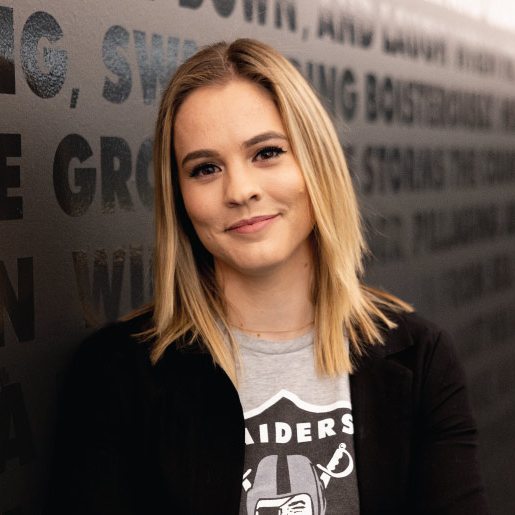
Cami Bennett
Creative Director, Las Vegas Raiders
“Thank you, Cami Bennett, Creative Director for the Las Vegas Raiders, for sharing your story! Cami defines the Raiders’ creative strategy, manages a team of designers, and ensures brand identity and values shine through every project from concept to execution.
With a background in Marketing, Graphic Design Technology, and an MBA, Cami built her path through internships, networking, sharing her work, and learning from industry leaders. That dedication and persistence opened the door to her role with the Raiders.
She highlights the importance of communication—learning to speak the language of others in the room to gain trust and push ideas forward—and the power of asking questions to learn, grow, and build confidence. Cami also values mentorship, visibility, and advocacy as key drivers in creating equality and opportunity in sports.
Her advice? Keep working hard, never stop learning, and always ask questions.“
– Zara
Please describe your role & responsibilities at that position?
Define the creative strategy and consistently communicate and get buy-in throughout organization, manage a team of designers and their project timelines, oversee creative from idea to execution, all while maintaining and ensuring consistent brand messaging, visual identity, and brand values.
What did you study in college and how did your educational background shape your career in the sports industry?
I majored in Marketing with a minor in Graphic Design Technology. I was also fortunate enough to pursue my graduate degree and earned an MBA.
There actually weren’t many sports classes available to me, most of my opportunities in the sports world were from pursuing internships.
Can you share the key milestones in your career that led you to your current position in the sports industry?
After dedicating countless hours to a college athletics internship, I was granted a full-time position with that university. But I didn’t stop there. I continued to network and engage with fellow creatives online and continuously asked for feedback on the artwork I shared. I also attended a sports design conference, which gave me another opportunity to network and learn from industry leaders. So by the time the position with the Raiders opened up, I knew who to contact and they already knew my work and who I was.
What are some of the biggest challenges you’ve faced as a woman in the sports business, & how have you overcome them?
I think one of the biggest challenges is getting your vision across to an entire organization. One of the most important things I’ve learned is to use the same lingo of those you are presenting to. What you think might be the most important aspect, might not necessarily be aligned with their priorities. Then through open communication, hard work, and execution, you’ll earn a type of trust that makes it easier and easier to push ideas and initiatives through.
Balancing a career is demanding. How do you manage a work-life balance? What strategies have worked well for you?
Managing a work-life balance is definitely a challenge when working in sports. To set myself for success, I rely on processes for project management that also prioritize communication with all involved. One of the biggest pieces of advice I always share is: ask questions. I ask questions constantly. When you’re early in your career, it can feel intimidating—but that’s actually the best time to ask. People expect you to be curious, and it’s how you learn, grow, and build confidence.
How important is mentorship for women in the sports industry? Have you had mentors or role models who played a significant role in your career and can give some details?
Mentorship is so important! I have mentors that I am constantly in communication with, I’m not sure how I would have gotten this far without them. It’s not just about learning how to do the job—it’s about having someone who understands the industry, who can offer guidance, and help you avoid the same missteps they made, and sometimes even just to blow off steam and help you see the bigger picture.
In a male-dominated industry, do you feel women are given equal opportunities? What steps do you think can be taken to promote gender equality in the sports industry?
I know that I am incredibly lucky to work for an organization that values all equality within the work place. But I understand this is not true everywhere, and that is why I think mentorship, visibility, and advocacy are so important. The more people see women thriving in these roles, the less taboo surrounds it, and the closer we get to making gender inequality thing of the past.
What aspects of your work in the sports industry do you enjoy the most? What parts do you find the most challenging ?
One of the best parts of working in the sports industry is the camaraderie—whether it’s collaborating with your internal team or connecting with creatives across other organizations. It truly feels like a family, and that atmosphere fuels your motivation to work hard and show up every day.
But the most challenging part? Finding a healthy work-life balance. It’s easy to get swept up in the passion and pace of the job, but it’s important to remember: working for the team is your career, not your entire life. Setting boundaries and protecting personal time is essential—not just for your well-being, but for sustaining creativity and long-term success.
What advice do you have for young women aspiring to build a successful career in the sports industry?
Keep working hard. Never stop learning, growing, or networking. Always, always ask questions and be curious. Never give up! ❤
What is your long-term personal goal that you still want to achieve both business wise and personal?
One of the most important things I’ve done for myself was to make goals that aren’t just professional. So often we focus solely on career milestones goals and feel lost after we either reach them or don’t reach them. Personal goals help keep you grounded, give you something to look forward to outside of work, and are essential for maintaining balance and avoiding burnout. They remind you that your identity is more than your job title.
Professionally, my long-term goals include continuously learning new tools and, more importantly, becoming a stronger advocate for my team—helping streamline processes so they can focus more on designing and less on project management.
Personally, I want to travel to as many countries as I can, read read read, maintain a consistent workout routine, confidently cook, dance, and would love to pick up an instrument. These goals fuel my creativity and keep me grounded outside of work.
Any fun facts or interesting things you’d like the world to learn about you? Favorite food, hobbies, pet peeves, etc.?
Last January, I had the incredible experience of traveling to Antarctica!
And next year my mom and I are going to hike to Mt Everest Basecamp!
 Women in Sports Business