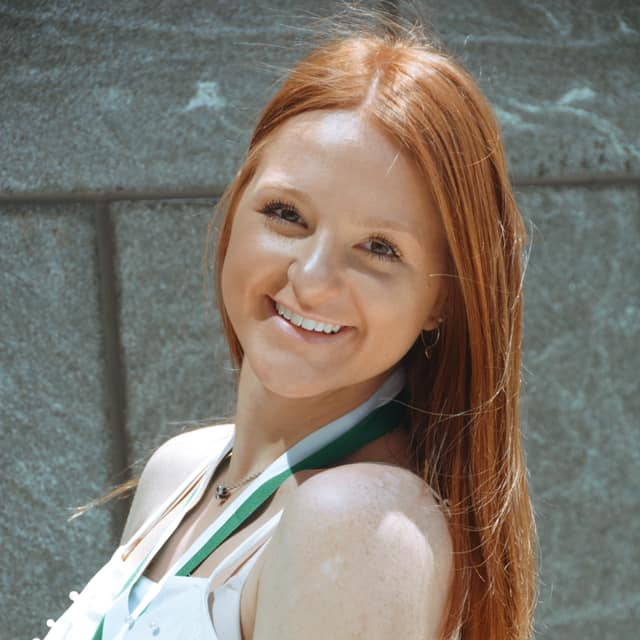
Jennifer Krsolovic
Manager, Corporate Partnerships at Lake Erie Crushers
“Thank you, Jennifer Krsolovic, Manager of Corporate Partnerships for the Lake Erie Crushers, for sharing your story!
Jennifer works closely with leadership to drive revenue through strategic partnerships, overseeing signage, promotions, hospitality, and community initiatives—while also helping manage over 200 events annually at Crushers Stadium.
With a background in Communications and a Master’s in Sport Management from Cleveland State University, Jennifer credits her success to strong mentorship, authenticity, and relationship-building. She emphasizes the importance of women supporting women, continuous learning, and creating meaningful community impact through sports.”
– Zara
Please describe your role & responsibilities at that position?
In this role, I work closely with our Vice President and Team President to build and strengthen relationships that drive revenue through corporate partnerships. These partnerships span a wide range of elements, including signage, in-game presentations, promotions, giveaways, hospitality, and initiatives that expand the Crushers’ community programs and presence. I am also responsible for managing and activating all existing partnership agreements, which involves collaborating with departments such as Marketing, Promotions, Food & Beverage, and Operations to ensure successful execution. Along with hosting 48 Crushers home games a year, I also contribute to the execution of 200+ events annually at Crushers Stadium.
What did you study in college and how did your educational background shape your career in the sports industry?
I earned my Bachelor’s degree in Communications and my Masters of Education with a focus in Sport Management from Cleveland State University. My educational background played an important role in developing key skills such as networking, public speaking, presentations, and time management.
Can you share the key milestones in your career that led you to your current position in the sports industry?
While all roles were important to shaping the pathway I took, each experience has given me skills that directly influence the work I do today.
With the Cleveland Guardians, I worked in the Family Room caring for players’ kids. The role may not have been sales-focused, but it taught me how central relationships are to everything we do. Building trust, being dependable, and forming genuine connections with team personnel and their families showed me that relationships are long-lasting when they’re built on authenticity, a lesson I still carry with me.
With the World Pickleball Tour, I was introduced to the world of partnerships and experiential marketing. I learned how to activate partnerships, work with brand ambassadors, and create experiences that connect brands to their target audiences. That opportunity opened my eyes to how storytelling and activation can drive value on both sides of a partnership.
Now, in my current partnership role, all of these experiences and several others, come together.
What are some of the biggest challenges you’ve faced as a woman in the sports business, & how have you overcome them?
One of the challenges I’ve experienced as a woman in sports is the common assumption that I may not fully understand the game or the industry. Whether it’s with fans, clients, or even colleagues, there can sometimes be an underlying perception that my knowledge or expertise isn’t as strong simply because of my gender. Over time, I’ve learned to view these moments as opportunities to demonstrate my experience, credibility, and passion for sports and being a team player, which not only helps break down those assumptions but also builds stronger respect and relationships in the process.
Balancing a career is demanding. How do you manage a work-life balance? What strategies have worked well for you?
Being early in my career, I’m still learning how to navigate work-life balance, but one of the most effective things I’ve been doing is setting boundaries and prioritizing time off. Working in sports can be unpredictable, and schedules often change quickly, so I’ve found that organization and clear communication are essential.
I try to be intentional with how I spend my time, whether that means honoring the plans I’ve made, avoiding over-scheduling, or carving out time to rest and reset. Maintaining work-life balance is an area I continue to be intentional about.
How important is mentorship for women in the sports industry? Have you had mentors or role models who played a significant role in your career and can give some details?
Mentorship has been one of the most important drivers in my career. In each stage of my journey, I’ve been fortunate to learn from mentors who have shaped not only my skills but also my perspective and experiences in the sports industry.
I met my first mentor as a student at Cleveland State University, where I was given the unique opportunity to serve as the first student-worker in the athletic department, a role that has since grown into an annual internship program. That experience gave me both direction and encouragement, and this mentor has continued to be a supportive influence in my career ever since.
During graduate school, I worked as a graduate assistant under another mentor who played a pivotal role in my development. Not only did this mentor support my academic work but also provided hands-on field experiences, giving me the chance to expand my network and even manage a team of students.
In my current role, I’ve been fortunate to gain yet another mentor who has been instrumental in helping me find my voice in the industry. While my first job after graduation provided a solid introduction to the field, my current position, guided by this mentor, has opened doors for me to develop new skills and take on greater responsibilities.
I look forward to continuing to build and grow these relationships as my career progresses.
In a male-dominated industry, do you feel women are given equal opportunities? What steps do you think can be taken to promote gender equality in the sports industry?
I believe equal opportunities for women in the sports industry are becoming more prevalent and accepted. To continue providing equal opportunities, I think women supporting women is a powerful start. Sharing more success stories of women who have grown from entry-level to executive roles can help inspire others. On the other hand, organizations or leagues can play a big role by offering mentorship programs that support and elevate women within their teams.
What aspects of your work in the sports industry do you enjoy the most? What parts do you find the most challenging ?
I’m grateful to have a career in a field that feels so natural to me. I grew up around athletics, and continuing that passion as a female in my family means a lot. Another aspect I enjoy the most, is the energy that is brought through sporting events: Opening Day, the roar of fans, big wins and walk-offs all give me chills. I love being part of something that brings people together, both on the field and from a business perspective. I also enjoy that no two days are ever the same, and the challenge of problem-solving. Most of all, I value providing a platform for affordable, local entertainment that makes a positive impact in the community.
One of the biggest challenges is realizing you can’t make everyone happy, such as an upset fan. I’ve learned the best approach is to be genuine, listen, and problem-solve to make things right whenever possible.
What advice do you have for young women aspiring to build a successful career in the sports industry?
One of the biggest pieces of advice I’d give is to really focus on building strong relationships. Put effort into connecting with people and adding value, and you’ll find that, naturally, through working together, those relationships will grow. That’s opened so many doors for me in a short amount of time.
The second piece of advice I would share is to keep learning along the way, you’ll cross paths with people, both in work and in life, whose approach or perspective you may not agree with, and that’s okay. Use those moments as opportunities to grow: take away the valuable lessons and insights from the relationship, and let go of the things that don’t serve you.
What is your long-term personal goal that you still want to achieve both business wise and personal?
My long-term goal is to continue learning and growing in the partnerships space while building on my pathway in community engagement. Having a positive impact on the community has always been important to me, from volunteering and serving on boards during my academic career to becoming engrained in a new community through business. I feel so grateful that my current role in minor league baseball allows me the opportunity to create relationships that impact both partnerships and community.
On a personal level, I hope to someday create a family of my own. Beyond that, I want to continue prioritizing balance, making time for family, friends, and experiences outside of work that fill my buckets including traveling and fitness.
 Women in Sports Business