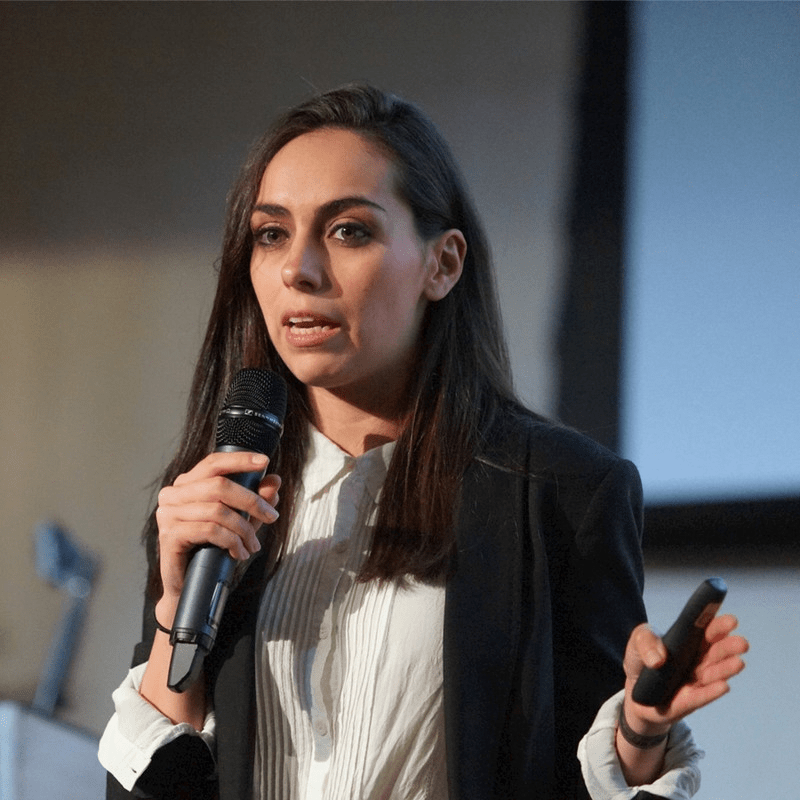
Karla Dominguez
Head of the USA Commercial Plan for Club de Fútbol Monterrey (Rayados)
“Karla Dominguez leads commercial growth and brand expansion for Rayados in the U.S., overseeing partnerships, sponsorships, and strategic initiatives tied to major international competitions like the FIFA Club World Cup, Leagues Cup, and CONCACAF Champions Cup.
With a background in Marketing & Advertising and a Master’s in Sports Management, Karla built her career through intentional steps, international experience, and resilience—submitting 100+ applications to break into the U.S. sports industry. She’s passionate about creating meaningful fan connections, advocating for more women in leadership, and encouraging others to stay persistent, adaptable, and intentional in their journey.
Thank you, Karla, for sharing your inspiring journey and helping pave the way for more women in sports.“
– Zara
Please describe your role & responsibilities at that position?
I serve as Head of the USA Commercial Plan for Club de Fútbol Monterrey (Rayados), where I lead the club’s commercial growth and brand expansion in the United States. I develop partnerships, negotiate sponsorships, and create strategic business opportunities that strengthen our presence in the U.S. market. I also serve as Project Lead for major international competitions such as the FIFA Club World Cup, Leagues Cup, and the CONCACAF Champions Cup, overseeing cross-functional execution and partner alignment. My role combines strategy, relationship-building, and project management to help position the club as a growing global football brand.
What did you study in college and how did your educational background shape your career in the sports industry?
I initially began college studying Tourism Management, but by my third semester I realized it wasn’t aligned with my goals, so I switched to Marketing and Advertising. From that moment on, I knew I wanted to build a career in the sports industry, so I intentionally focused my projects and research on sports-related topics. Later, I pursued a Master’s degree in Sports Management to further specialize in the field.
For me, university is what you make of it. You can have hundreds of students in the same classroom, but what truly matters is how intentionally you choose to learn and apply what you’re being taught. Regardless of whether you attend the “best” or “worst” university, the real difference lies in your mindset, how much you want to grow, and how strategically you use the tools you’re given.
Can you share the key milestones in your career that led you to your current position in the sports industry?
There isn’t one single milestone that defines my journey it has been the result of many intentional steps. Completing my MBA in Sports Management, gaining international experience in Mexico, Spain, and the United States, and consistently pursuing opportunities aligned with my long-term vision have all shaped my path. The sports industry is not easy to enter, especially at an international level. When I wanted to gain experience in the United States, I submitted over 100 applications. That process led to only a handful of interviews, and ultimately one company that believed in me enough to move forward with the visa process. It wasn’t simple but it taught me resilience and the importance of persistence. If there’s one key lesson, it’s this: the path may not look exactly how you imagined it, but if you stay clear on your goals, remain adaptable, and keep pushing forward, the right opportunity and the right people will eventually align.
What are some of the biggest challenges you’ve faced as a woman in the sports business, & how have you overcome them?
I’ve been fortunate to work in environments where I haven’t personally felt limited simply because I am a woman. However, one of the biggest challenges I’ve observed in the sports industry is the lack of female representation in senior leadership positions.
Throughout my career, I’ve often been one of the few women at the decision-making table. While I’ve had strong female colleagues, it’s still uncommon to see many women in top executive roles. That reality can sometimes mean having fewer mentors or role models who look like you. Rather than seeing it as a barrier, I’ve chosen to approach it as a responsibility. Whenever I collaborate with other women, I intentionally build strong alliances and support networks. Working within a club that has both men’s and women’s teams has also made me more aware of structural gaps such as differences in budget or visibility and I do my part to advocate for continued growth and equity within my scope of influence. For me, overcoming challenges as a woman in sports has been about leading with competence, collaboration, and consistency and contributing to an environment where the next generation of women sees more seats at the table.
Balancing a career is demanding. How do you manage a work-life balance? What strategies have worked well for you?
Work-life balance is something we often talk about but don’t always prioritize especially in the sports industry. Earlier in my career, my ambition led me to overextend myself, and I eventually experienced burnout. That became an important turning point.
I learned that success has to be sustainable. Now, I focus on listening to my body, setting healthy boundaries, and making sure I don’t lose myself while pursuing professional goals. Taking care of yourself isn’t a luxury it’s essential for long-term growth.
How important is mentorship for women in the sports industry? Have you had mentors or role models who played a significant role in your career and can give some details?
Mentorship is extremely important for women in the sports industry. In many of my previous roles, I didn’t see many women in senior leadership positions, and representation truly matters. While I’ve learned from great leaders both men and women having female role models can provide a different level of perspective and inspiration.
Even if mentors aren’t in your immediate environment, it’s important to actively seek them out. Building intentional networks with other women in the industry can make a meaningful difference.
In a male-dominated industry, do you feel women are given equal opportunities? What steps do you think can be taken to promote gender equality in the sports industry?
I don’t believe we are fully at a point of equal opportunity yet. Progress has been made, but historically men have had more years of presence and experience in senior roles within the sports industry, and that still influences leadership structures today. However, I believe this is evolving. As more women gain experience and access to decision-making roles, representation will continue to grow. Change takes time, but it is happening. From where we stand, we can all contribute by advocating for fairness, encouraging women to pursue leadership roles, supporting one another, and not remaining passive when we see inequality. Promoting gender equality starts with accountability, allyship, and creating space for more women at the table.
What aspects of your work in the sports industry do you enjoy the most? What parts do you find the most challenging ?
One of the aspects I enjoy the most is building meaningful connections between the club and the fans. Seeing how passionate supporters are and being able to create experiences or initiatives that bring them closer to the team is incredibly rewarding. That emotional connection is what makes sports unique. One of the most challenging parts, especially in futbol, is that it can be a highly politicized and complex industry. There are structural issues and long-standing dynamics that aren’t always easy to change. Learning to navigate those realities while still advocating for positive progress has been one of the biggest professional challenges. For me, the key is staying committed to making an impact where I can, even when broader changes take time.
What advice do you have for young women aspiring to build a successful career in the sports industry?
Have a clear vision, even if the road isn’t linear. Be intentional with your education, your internships, and the opportunities you pursue. The sports industry is competitive, so perseverance and resilience are essential. Don’t be afraid to apply for roles that challenge you, to relocate if necessary, or to step outside your comfort zone. Every experience adds to your growth. And most importantly, don’t lose yourself in the process. Ambition is powerful but sustainable success comes from balancing drive with self-awareness and well-being. The sports industry is often romanticized, and while it is exciting and deeply rewarding, it is still a business with pressure, complexity, and demanding moments like any other profession. Understanding that reality early on will help you build a sustainable and successful career, not just a dream.
What is your long-term personal goal that you still want to achieve both business wise and personal?
Long term, professionally, I aspire to continue building an international career within the sports industry, taking on leadership roles that allow me to shape global strategy, drive cross-border growth, and contribute to the evolution of the game from a business perspective. I am especially interested in expanding opportunities for clubs and sports properties across international markets.
Personally, I want to continue growing as a leader without losing balance. Sustainable success is important to me building a meaningful career while maintaining strong relationships, health, and personal fulfillment.
Ultimately, my goal is to create impact at a global level while remaining grounded and intentional in how I grow both professionally and personally.
Any fun facts or interesting things you’d like the world to learn about you? Favorite food, hobbies, pet peeves, etc.?
I’ve always loved sports beyond my professional career. I practiced figure ice skating for 13 years and still follow it closely. I’m also a big Formula 1 fan especially Checo Pérez and I admire athletes like Cristiano Ronaldo and Rafael Nadal for their discipline and mindset.
Since I travel often for work, I prefer more relaxed vacations. I enjoy trying new foods (tacos, sushi, seafood, and pizza are my favorites), and I have a Border Collie who is my favorite adventure partner.
 Women in Sports Business